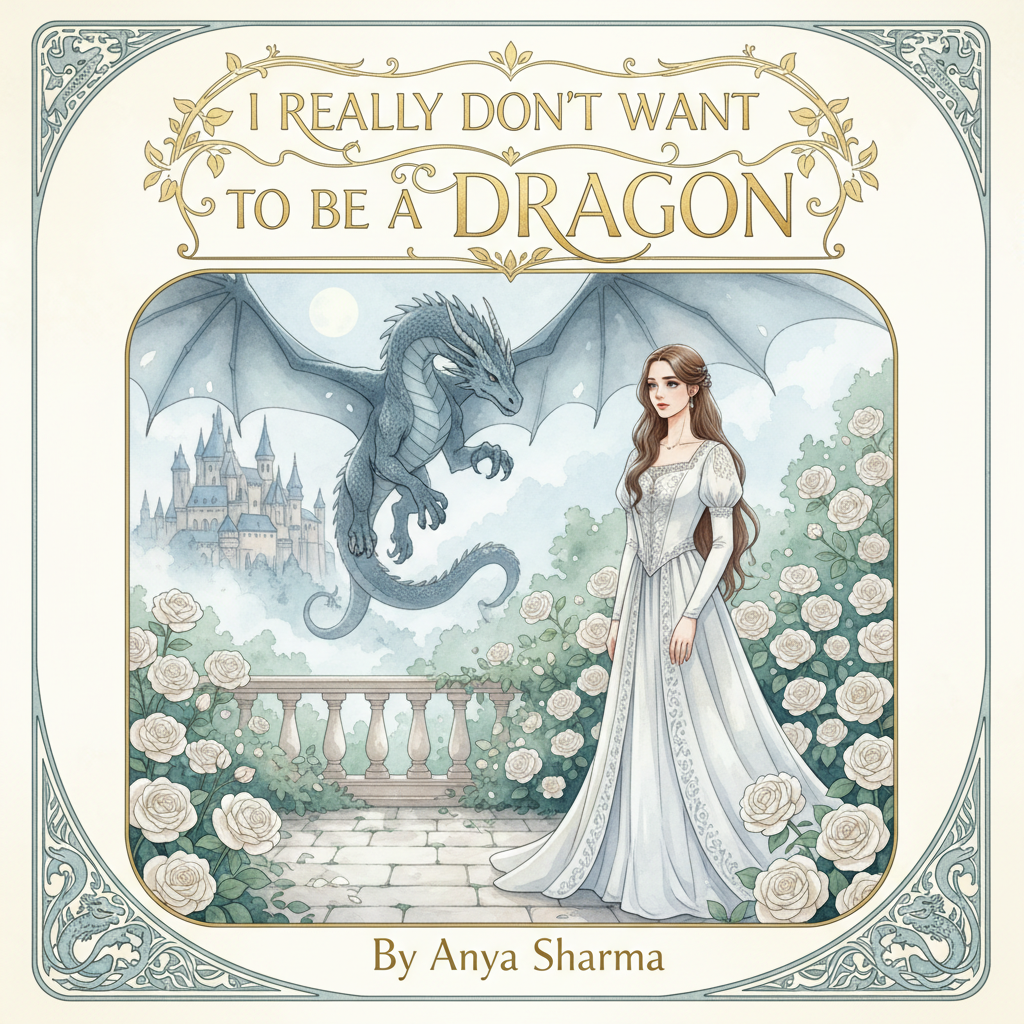
I Really Don't Want to Be a Dragon
People always wish their children could become someone great, but Huang Ze's parents never imagined, even in their wildest dreams, that their son would actually turn into a dragon! He could fly, breathe fire, and had a voracious appetite. Yet, since he only became a dragon halfway through life, Huang Ze had no experience living as one. He couldn't hunt, wasn't good at fighting, and spent his days worrying about how to fill his belly. Though the world was vast, there was no place for a dragon like him to call home. Where could he go from here? When ordinary folks are in trouble, they turn to the government for help. Who says dragons can't be ordinary folks too?
I Really Don't Want to Be a Dragon
If a dragon spent every day worrying about filling its belly, then perhaps it ought to reflect deeply—was it failing as a dragon?
Huang Ze, however, had no such awareness. What he felt was nothing but pent-up frustration and resentment.
After all, he had never intended to become a dragon.
About half a year ago, Huang Ze woke up to find himself transformed into a dragon of a fantastical world.
Thirty or forty meters long, weighing over a hundred tons, capable of flight and breathing fire—a true monster, the apex of the food chain.
At first, Huang Ze was excited. The metamorphosis from human to dragon brought him immense power and the gift of flight. The world, seen through this new perspective, was novel and fascinating, and he delighted in it.
But it wasn’t long before everything soured.
Perhaps because he had inherited this form halfway, Huang Ze had no memory of his predecessor, nor did he awaken any inherited talents or skills. Everything had to be learned from scratch.
Take hunting, for example.
His predecessor was likely a pseudo-dragon—dim-witted, without followers or servants, ignorant of storing food, and the lair was so clean not even a mouse remained.
So, whenever hunger struck, Huang Ze had to hunt for himself.
But herein lay the problem: Huang Ze had no idea how to hunt.
This was hardly surprising. Anyone suddenly changed into a dragon, with a body utterly unlike a human’s, couldn’t possibly adapt instantly. There must be a period of trial and error.
Moreover, hunting itself was a t
📚 Related Recommendations
View More >